
Migracja to nie tylko statystyki, liczby czy decyzje polityczne. To przede wszystkim historie ludzi – ich doświadczenia, emocje, wyzwania i nadzieje. W projekcie Beyond Borders chcemy spojrzeć na temat migracji właśnie z tej perspektywy: osobistej, ludzkiej i pełnej empatii.
Galeria „Moving Stories” to przestrzeń, w której uczestnicy projektu dzielą się refleksjami, opowieściami i inspiracjami związanymi z migracją, spotkaniem kultur oraz budowaniem wspólnoty ponad granicami. Każda z przedstawionych historii pokazuje inną perspektywę i inne doświadczenie – czasem osobiste, czasem wynikające ze spotkań z ludźmi z różnych części świata.
Zebrane historie, fotografie i cytaty tworzą wspólną opowieść o ruchu, zmianie i poszukiwaniu miejsca, które można nazwać domem. Pokazują również, jak ważną rolę w procesach migracyjnych odgrywają dialog, zrozumienie i wzajemny szacunek.
Zapraszamy do poznania historii uczestników i spojrzenia na migrację przez pryzmat ludzkich doświadczeń, które budują mosty między kulturami. 🌍
Projekt jest dofinansowany ze środków Unii Europejskiej.

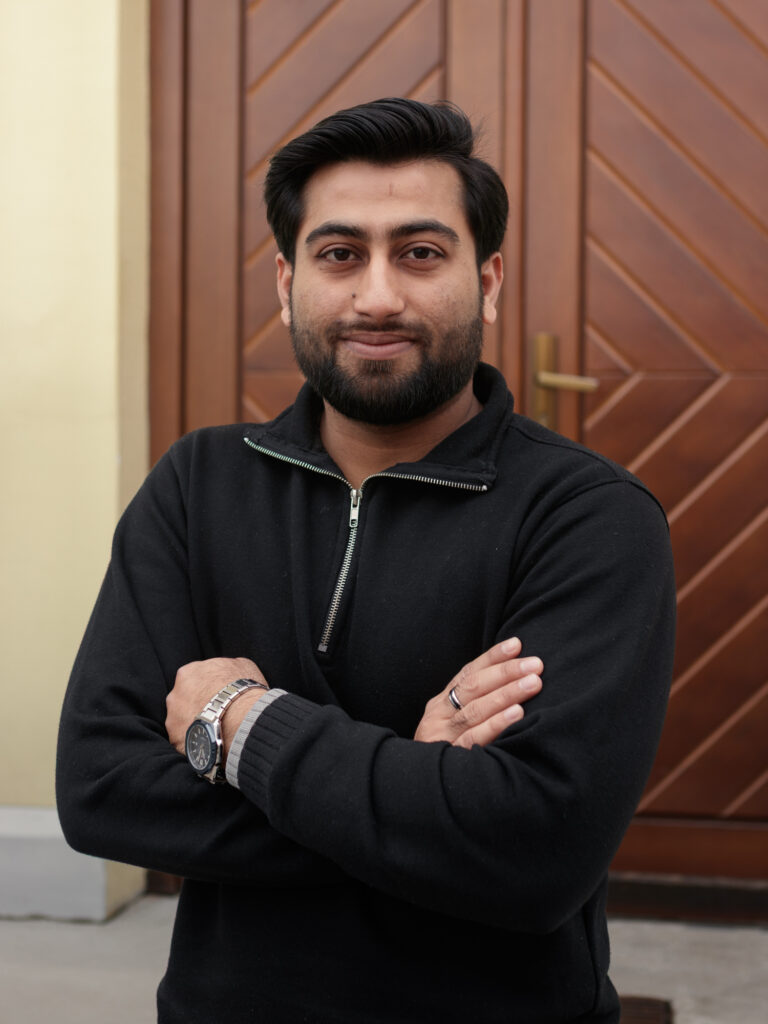
Mustang
I left my military path in Pakistan to chase my childhood dream of automobile engineering on a road that ultimately led me to Italy. My name is Muhammad Subhan and I grew up surrounded by memories filled with my family’s passion for cars. Since I was a child I knew I wanted to turn wheels and ignite engines, wondering how the car machine worked as it brought joy to my heart and curiosity to my mind.
With a degree in mind, I saw an opportunity to uplift my community, reflecting myself on the continuous struggle of Pakistani immigrants. In the Italian streets, I found a new sense of purpose, inspired by my collectivist roots.
I’m authentic, resilient, and tough. My mantra is „be tough, be hard, but be bland of heart.” I’m driven to excel, not just for myself, but for Pakistan, wishing to craft a better future for my people.
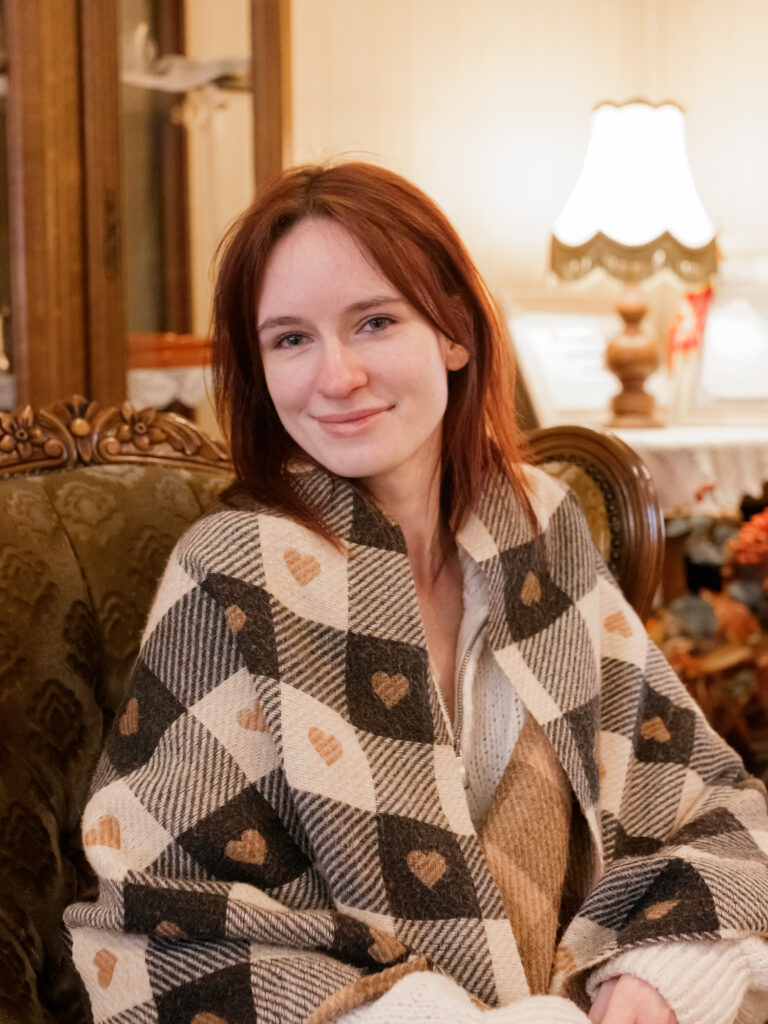
Milena
I’m 21 now. But I’ve also been 8, and 11, and 16, and 20.
I’ve lived so many roles that were never supposed to be mine. No one asked if I was okay. No one said thank you. I don’t need that anymore.
When I was eight, I learned that being loved meant being useful. I would walk my drunk grandmother home from the playground, holding her hand like I was the adult. She was the only person who ever loved me without conditions.
At eleven, I tried to save someone I met online from hurting herself. I thought it was my responsibility to keep people alive. I blamed myself for everything. Once, I hit myself for forgetting homework. I thought mistakes made me unworthy.
At twenty, I became the protector. The witness. The proof. I defended my brother. I documented my father’s abuse. I learned how to speak to police officers and lawyers before I learned how to rest.
My story has always been about others. Who I had to save. Who I had to survive. Who I had to become.
But somewhere in between all those roles, there was still a girl who liked to write. Who pressed flowers between book pages. Who believed that one day she would live in a home that felt warm and safe.
I’m still that girl.
I became an artist. A writer. A woman. A lesbian. A daisy growing through concrete.
And I’m learning that I don’t have to earn love anymore.
I want to be the person I needed when I was eight
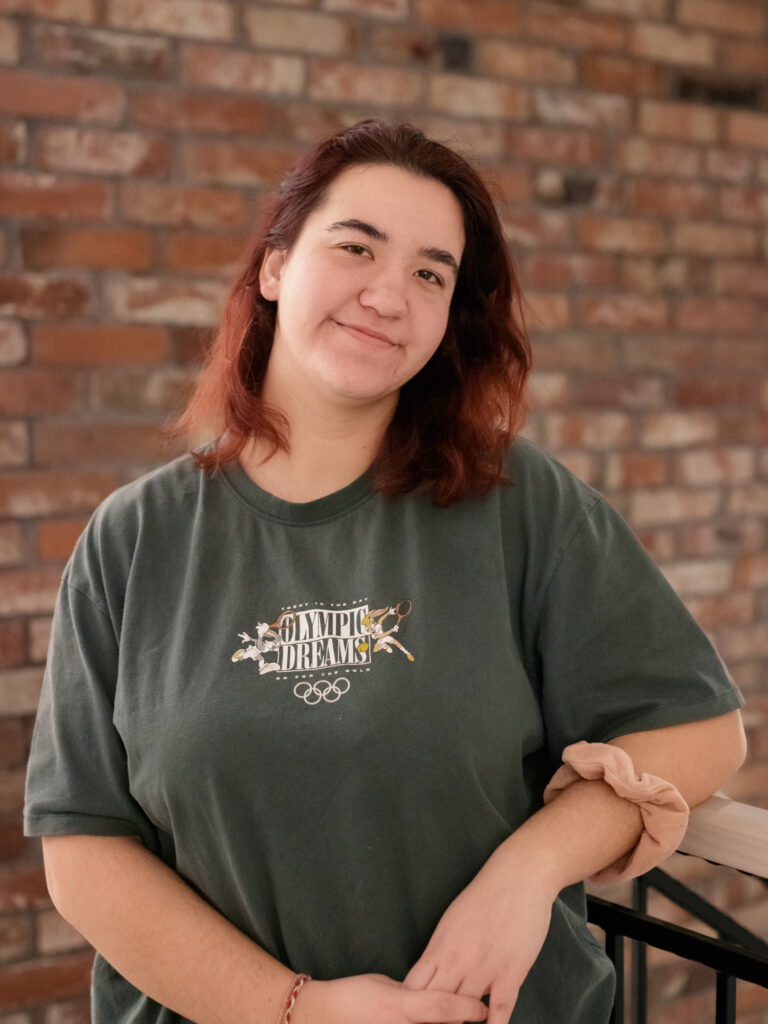
Fay
If you look at my life now, you might see success. I work with multiple NGOs, writing and
facilitating youth projects. I was a scout for more than ten years. I am completing my
Master’s degree in Food Science and Human Nutrition while studying for a second
Bachelor’s in Paramedics. I speak five languages and I am learning a sixth. I am planning to
pursue a PhD.
But my story did not begin with achievement. It began with confusion.
As a child, the world felt upside down. Letters moved on the page. Words refused to stay
still. My parents did not understand what was happening at first . They thought something
supernatural was happening. Then they thought I had a learning disability. I grew up
believing I was simply not enough.
I was not bullied openly, but I always felt different. Every week I was taken out of class to see
a social worker in school . In fifth grade, I was diagnosed with dyslexia and attention
difficulties. Later, I was also diagnosed with severe dyslexia and ADHD. Still, many people
around me insisted I was just lazy.
School was a battlefield. I remember a math teacher who called me stupid because I solved
problems differently. I knew I was good at math — I almost joined the national mathematics
team — but he wanted one specific method. When I stood up for myself, I had to retake an
exam in front of all the math teachers. I scored full marks. He lost his position. That was the
first time I understood that my difference was not weakness.
The discrimination did not stop there. I lost a university placement after being unfairly
examined.
But every “you can’t” became fuel.
I am the first person in my family to attend university, the first to complete advanced
degrees. I struggled. I used unhealthy coping mechanisms at times. I doubted myself. Yet I
kept going.
If I could speak to my younger self, I would say: The world can be cruel. Do not listen to
them. Your mind works differently — and that is your strength.
This is my moving story — not because it is perfect, but because I refused to stop moving.
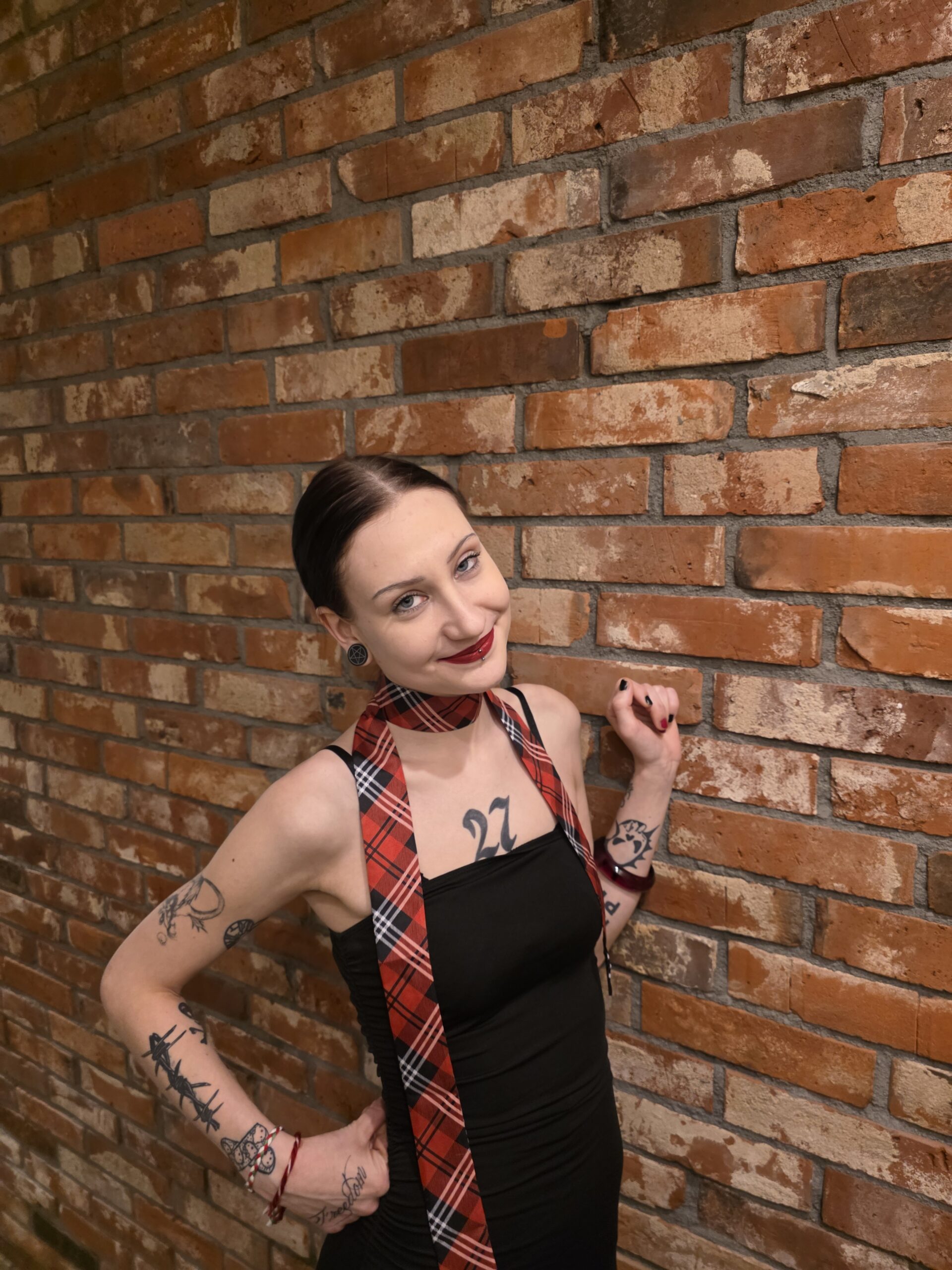
Julia
Everything started when I was 14.
At first, it was anorexia. Silence. Control. Wanting to disappear without anyone noticing. I didn’t talk about it. I didn’t ask for help. I just kept shrinking -physically and emotionally.
Then came bulimia. Ten years of fighting my own body. Years of hiding food, hiding shame, hiding pain. There was a period when I was vomiting up to twenty times a day. Around six years of living like that. When my anorexia was at its worst, I had no energy for anything. I weighed 38 kilograms. My mom had to take care of me like I was a child again. I was depressed. I was exhausted. I was surviving, not living.
During that time, I lost a friend.
I was surrounded by people who hurt me instead of helping me. I was bullied. I heard things like “you’re too thin, no one will ever love you.” I was called stupid. I believed it.
Both of my ex-partners were heavily addicted. I was too. One of them even went to prison and had a secret family I didn’t know about. I experienced sexual violence and toxic behavior in relationships that were supposed to be safe. I kept choosing people who confirmed what I secretly thought about myself — that I wasn’t worthy of something healthy.
For a long time, I felt like I didn’t belong anywhere. I thought maybe I would never find my place in the world. Maybe love just wasn’t meant for me.
I spent a year in a psychiatric hospital. That was the turning point. Not because everything magically healed — but because I finally stopped pretending I was fine. I shared my story with my family. I asked for help. And slowly, things started to change.
Today, I’m 25.
I’ve survived eating disorders, addiction, abusive relationships, trauma, and depression.
And I’m still here.
I’m grateful to my family for never giving up on me, even when I gave up on myself. I’m still healing. I’m still learning. But I know one thing now:
My story is not about being broken.
It’s about staying alive.
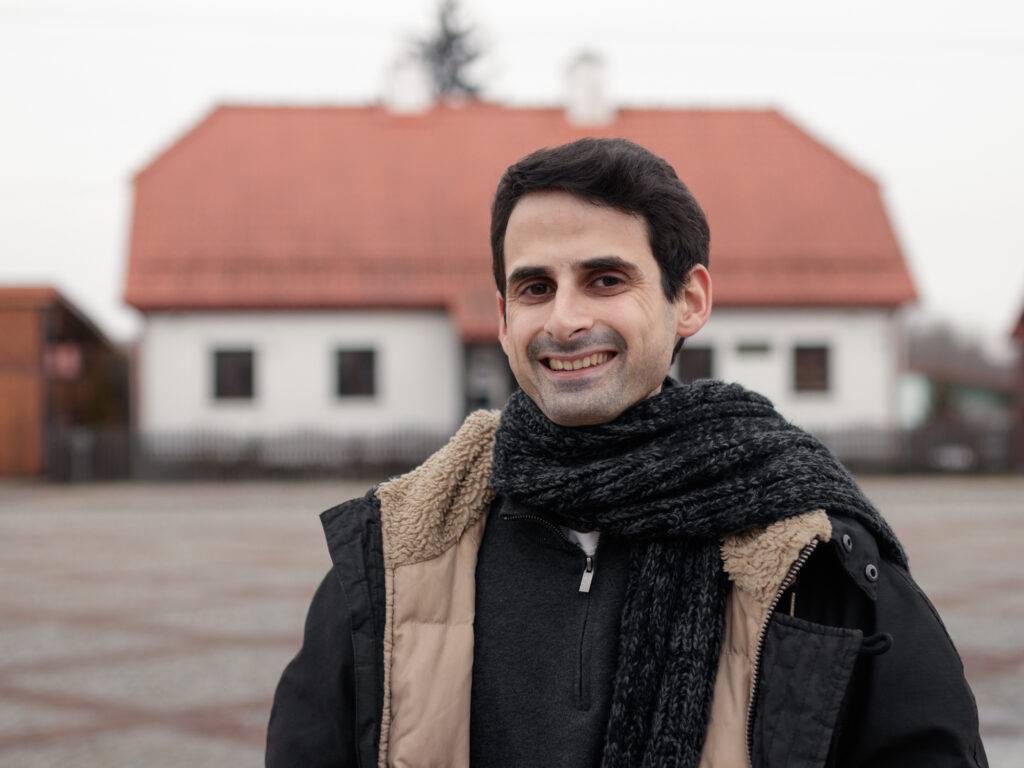
Gabriel
“I’m the fifth of ten children. If my parents didn’t believe in God, I probably wouldn’t be here.”
He was born into a Catholic family where one salary supported everyone. His father worked and carried the weight of the household. “He gave us more than he actually could.” His mother left her career to raise the children. There was no luxury, but there was always food, clothes, school events. “No one felt left out. We had what we needed.”
His parents struggled at times. Serious illnesses hit the family. He went through a life – threatening disease himself. “I was protected. By my family. By our Catholic community. I never felt alone.”
Today, four of his siblings are married. There are eight nieces and nephews. “Family gave me everything.”
What helped him build this deep sense of peace, he says, was the Neocatechumenal Way in the Catholic Church. “Through that community, I learned to trust God in a real way. Not just in words.”
Last year, he took the exam to become a public school teacher. He passed – but missed the required score by half a point. “I studied so much that I forgot what actually makes me happy. For two weeks, I was devastated.”
Then something shifted.
“This year I realized I can travel. I can see my friends. Practice languages. Do the things I love. Not just bury myself in preparation. Maybe God was telling me: you did well, but this is not your place right now.”
He believes that God allows things for a reason – even disappointments. “My backpack is lighter now.”
When I ask how he feels about his life, he answers in Spanish: “Bendecido.” – that means Blessed.
He doesn’t believe in temporary relationships. For him, love means marriage, mutual self-giving, respect for each other’s space. “I want someone who shares my values.”
He looks calm when he says it:
“God loves me the way I am. That’s why I’m happy.”
“God is everywhere.”
Klara
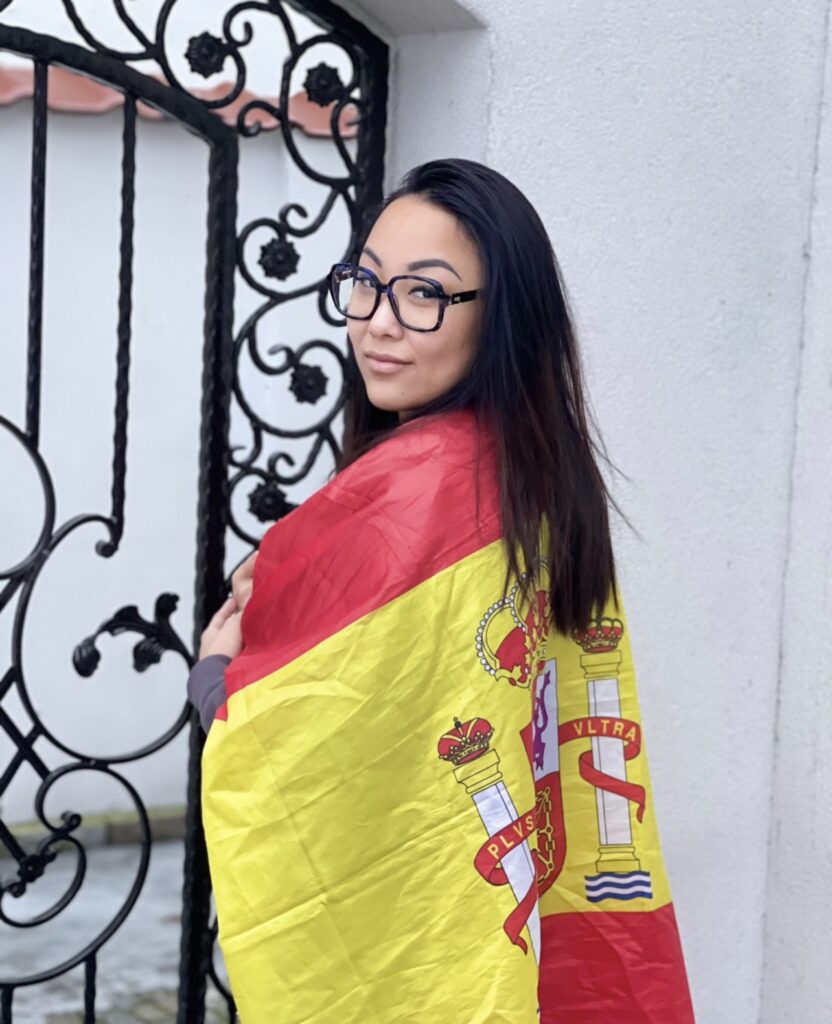
imagine being completely Spanish, but everyone who looks at you assumes you are a foreigner. That is my everyday reality. I was born in China, but my family adopted me when I was just six months old. I grew up right on the coast of Cádiz. My mom, my aunt, and my grandparents raised me, proving every single day that family is about who chooses you, not biology. I had a really happy childhood, full of great memories hanging out by the beach. But then high school hit, and things got tough. The other kids could not understand that a girl with Asian features was as local as they were. I would constantly get asked, „Where are you actually from?” The bullying was heavy, and I felt so isolated. The hardest part was the teachers. Instead of helping, they looked the other way or said things like, „They are just joking around.”
It was a lonely time, but I refused to let it break me. I was not hiding in my books to escape; I just happened to be a naturally good student, so I kept getting top grades and waiting for things to get better. And they really did. Going to university changed everything. Stepping out of that toxic high school bubble felt like taking a massive breath of fresh air. I made genuine friends who looked at me and actually saw me, not a stereotype. I finally got to just be myself. Now, I have my degree in Pedagogy and I am finishing up my Master’s in Teaching. Pretty soon, I will be the one standing in front of the classroom. I want to be a great teacher academically, but my biggest goal is to show my future students a simple truth. Identity is built by love, not by how you look.
Krasi
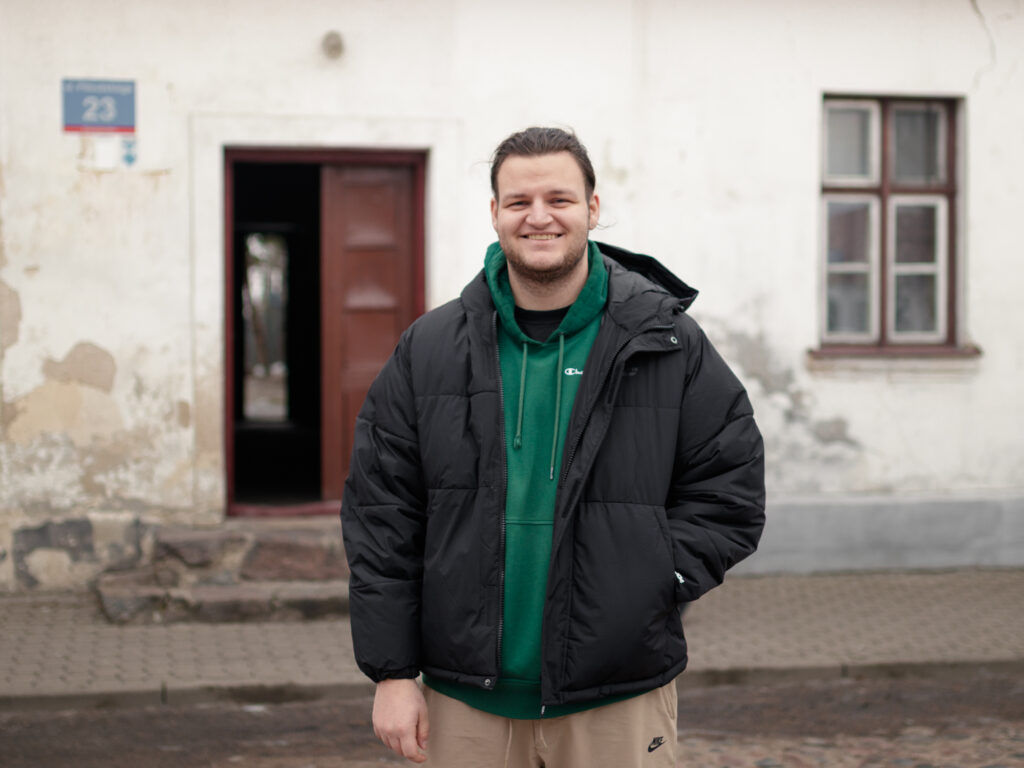
“I think I’ve spent most of my life moving—physically, but also inside myself.
The first big move was when I was fourteen. I left my home city and went to a boarding school about eighty kilometers away. It was kinda “boring school” though people imagine rich kids, but it wasn’t like that. It was just… far. Far from my friends. Far from everything I knew.
Everyone there was experimenting—smoking, drinking, acting cool because we were away from our parents. And I remember thinking, ‘Why should I do this if it doesn’t feel like me?’ People kept telling me, ‘You’ll start smoking there.’ I didn’t. I was too stubborn. I still haven’t tried, and I don’t regret it.
My favorite memories from that time are quiet ones. My roommate was one of the ‘cool’ guys. I think he was a gay, actually. Late at night he’d come back and sit with me in the room. He’d tell me everything—who did what, who liked who. I knew everyone’s story, but they didn’t really know mine. Those nights stayed with me.
By the end of high school, I finally stepped out of my comfort zone. I wasn’t cool, but I found other not-cool kids. Our hobby was going to second-hand shops. None of us smoked. We drank sometimes, but not like the others. It felt honest.
When we graduated, everyone went back to their hometowns. Suddenly, I was alone again. I remember thinking, ‘I don’t have much to do now.’ I got my first job as a warehouse worker, selling grain. I liked earning my own money. It made me feel independent. I bought myself a game console. It sounds small, but it mattered.
Then university came. Another move. Another dorm. Another room with a boy I didn’t know. Computer science again. Thirty guys, almost no girls. Everything felt competitive and toxic. I remember thinking, ‘I don’t even want to participate in this.’ But loneliness catches up to you eventually.
That’s when I went to the United States for the summer. Everyone said they’d come with me, but one by one they dropped out—girlfriend, job, excuses. In the end, I went alone. I remember asking myself, ‘Why should I care about keeping others around if they don’t show up?’
I lived on Cape Cod and worked as a chef. That’s where I learned I love cooking for other people. I’d walk out of work in my chef’s coat and see people eating pancakes I made, and I’d think, ‘I made those.’ It gave me joy.
Sometimes I’d be riding my bike or standing in a store and suddenly think, ‘Shit. I’m in America. I’m here by myself.’ I felt present—really present.
The second summer was even better. We lived in a huge shared house. I cooked after work with the chefs. We had bonfires, fishing trips in the Atlantic, long conversations. It felt like I finally found my people, even if just for a season. I had a girlfriend that summer, she is from Haiti, singer.
I think I’ve always been searching for a connection. Not romance—just people. People who see you. People you can sit with and drink tea at night.
Now, I want a simple life. A small house. Maybe near a forest. A family. A couple of kids. Old Bulgarian names. I don’t want too much from life because if you want too much, you’ll never have enough.
My biggest fear is living rent to rent. But my biggest hope is being that calm, chill old guy in the village—the one who doesn’t get angry when the football lands in his yard.
People tell me I look scary, but I’m friendly. I’m a teddy bear.
I was a closed kid once. But little by little, I opened up. I’m not fully there yet—but I’m close. Close to blooming.
And honestly? Right now, I’m pretty happy.”
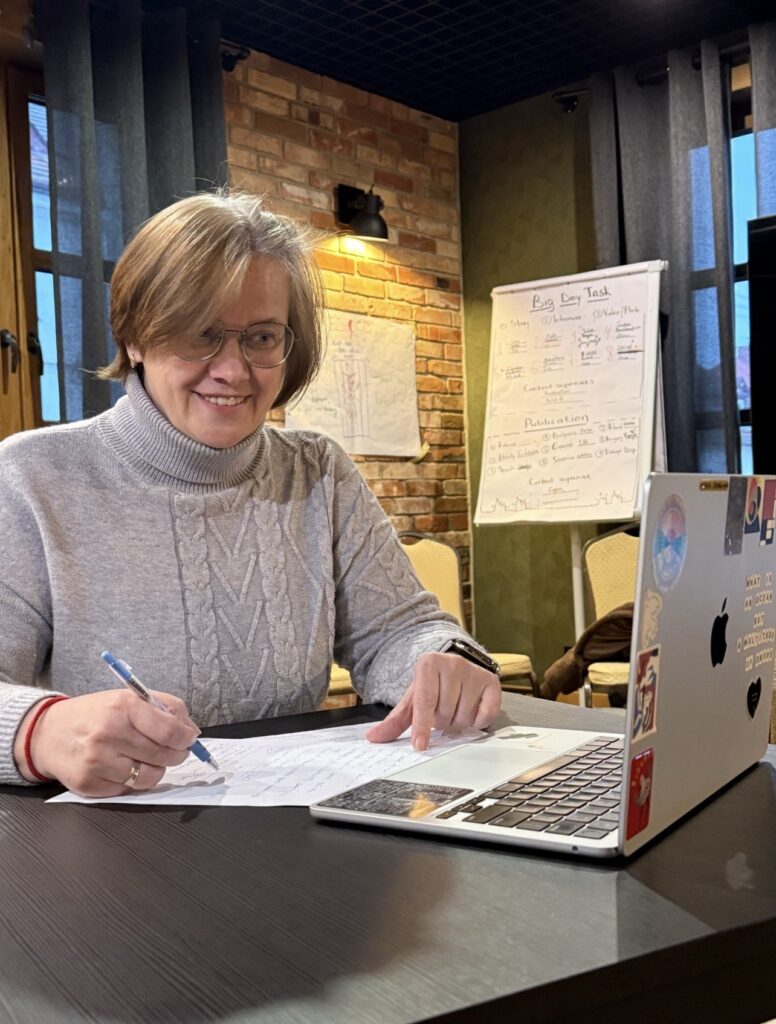
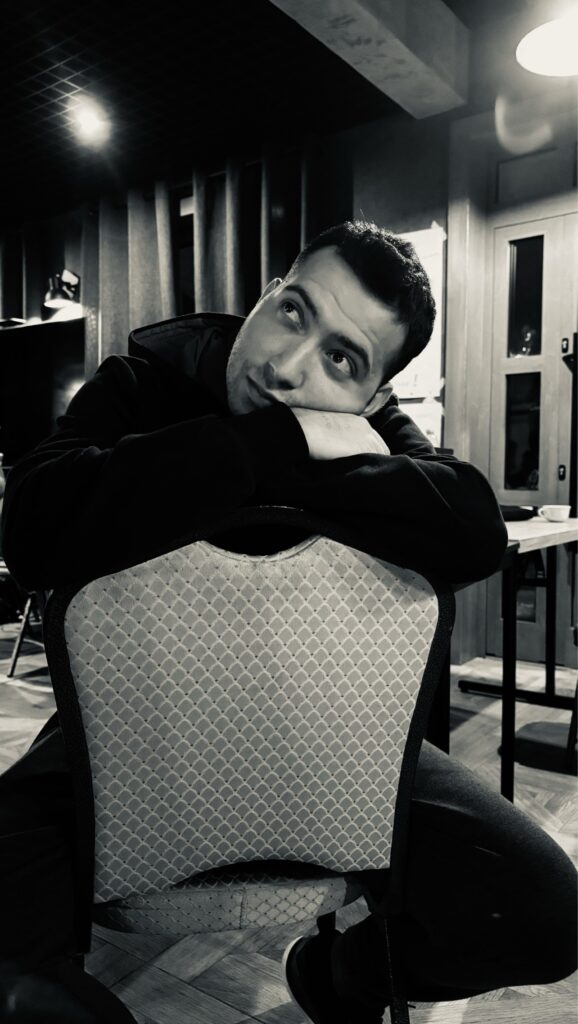
Natalia
What happens when you combine STEM, multicultural magic, and a passion for non-formal education in the heart of Helsinki? You get EO STEM JAM.
Every child who joins us carries a story. At the centre of these stories is Natalia Gatanova, our Educational Organiser. A polyglot fluent in Russian, Polish, and English, Natalia’s years of expertise are fuelled by a simple, powerful belief: true learning only happens when a child is truly motivated.
Methodology with Heart
In our five annual events, we don’t just teach Maths or Language Theory; we build confidence.
- The Journey: Children tackle challenges in small groups tailored to their level. As they succeed, they earn the chance to dive into their passions—be it chess, football, drawing, or model-making.
- The Pulse: Our IT platform connects dedicated volunteers from across the globe, bringing a rich tapestry of languages and cultures to every session.
- The Community: We are a meeting point for everyone. With a beautiful mix of local Finnish families (40%) and international residents, we prove that cooperation knows no borders.
„Learning is most effective when the goal is in sight and the feedback is immediate.”Through the camaraderie and dedication of our volunteers, we create a space where every child feels they belong. We aren’t just teaching skills; we’re moving stories forward.
Ozgur
My name is Ozgur. I’m 22. I’m from Ankara — the capital of Turkey. And I love my country deeply. That’s what makes this story hurt twice as much.
Growing up, I watched instability become normal. Economic crises, political tension, uncertainty — they weren’t events, they were just the background noise of life. Slowly, the quality of life faded. You don’t notice it all at once. It happens quietly. One year at a time. One dream at a time.
People think leaving your country is about ambition. Sometimes it is. But sometimes it’s about survival. I didn’t dream of leaving. I didn’t plan it. I didn’t want it.
But opportunity in Turkey has become a competition you can’t afford to lose — and a game you’re not allowed to play fairly. Corruption, favoritism, shrinking opportunities. You’re either the best of the best, or invisible.
So I’m going to Brussels. Not because I want to build a new life somewhere else — but because I can’t build one where I am.
And that creates a strange kind of pain. Because I still love my country. I still feel like I belong to it. I still believe that one day I should come back and give something to it.
It hurts once because it’s forcing you away. It hurts twice because you don’t want to go.
I study computer engineering at TED University. Like everyone else, I grew up with the myth of „university life.” The dream: friendships, freedom, growth, community, discovering yourself. They sell it to you as the best years of your life.
But for many of us, that dream is already dead.
Students have split into two worlds. One group wants to live — socialize, love, enjoy youth, feel alive. The other group only works — career, CV, competition, survival.
At first, I was in the middle. I had a girlfriend. I had a big friend group. I had a social life. I was happy. Then reality caught up. I realized that in Turkey, you don’t get to balance life and ambition anymore. You choose one. And if you care about your future, you sacrifice the rest. So I left my relationship. I left my social circle. I left the life I had built. Not because I wanted to. Because I had to.
It made me depressive. Quiet. Isolated. But focused. Now I’m one of the „lucky ones.” I have opportunities. Education. A path out. And that creates another kind of guilt — because everyone around you is struggling. Your friends. Your classmates. Young people with dreams and no doors. When everyone around you feels hopeless, it changes you too. Even if you’re the one escaping. The hardest part isn’t leaving. The hardest part is loving a country that can’t hold you. Belonging to a place that doesn’t have room for your future.
I’m not angry at Turkey. I’m heartbroken for it. Because when a country loses its youth, it doesn’t lose workers. It loses dreams. It loses hope. It loses tomorrow. And the most painful part? I don’t feel like I’m chasing a better life. I feel like I’m being quietly sent away from the one I wanted.
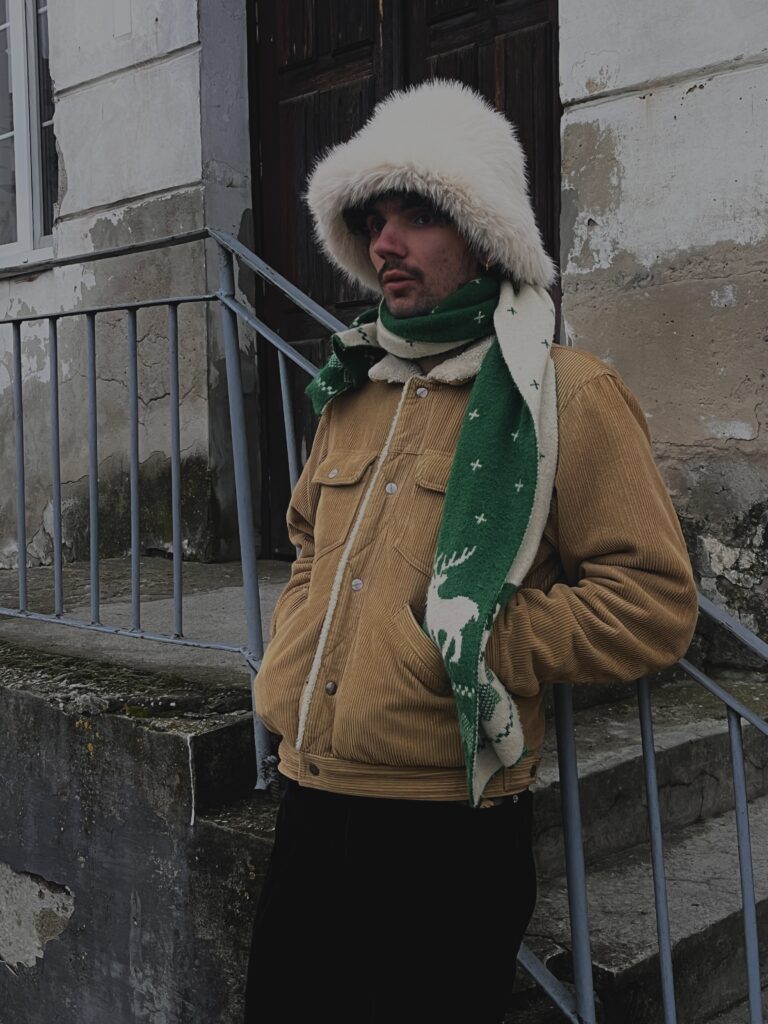
Nazar
I moved to Poland to study and for a long time I truly felt at home here. This country changed me. And Poland changed too through these 4.5 years.
This year Spain happened… and something inside me shifted.
I realized maybe I was trying to convince myself that Poland is still my home. Maybe at the beginning it really was. But sometimes we grow and when we grow, places that once fit us no longer do. And that’s okay.
I’m deeply grateful for Poland, for the people I met here, for everything I learned. But this year feels like a turning point. A year to move.
It’s funny because one of my Erasmus projects was called “To Move” in Latvia. I loved Latvia too. I even felt like I could live there but it was too cold for my soul.
Recently for my university exam (Etude), I created a 3-minute performance about “home.” Because Spain felt like a volcano inside me.
In that performance I said:
My previous home is far away. There is war there. Only my past connects me to it now.
My future home is also far away maybe even further.
And then I asked myself:
If I don’t feel home here, where is my home?
And I realized something powerful
My only real home is my body.
No matter which country I live in, my body will carry me. My body is the only home I will have for this entire life.
I’ve been searching for “home” for years Ukraine, Slovakia, back to Ukraine, then Poland and now something new is calling me.
Maybe home is not a place.
Maybe home is who we become. ✨
Teodora
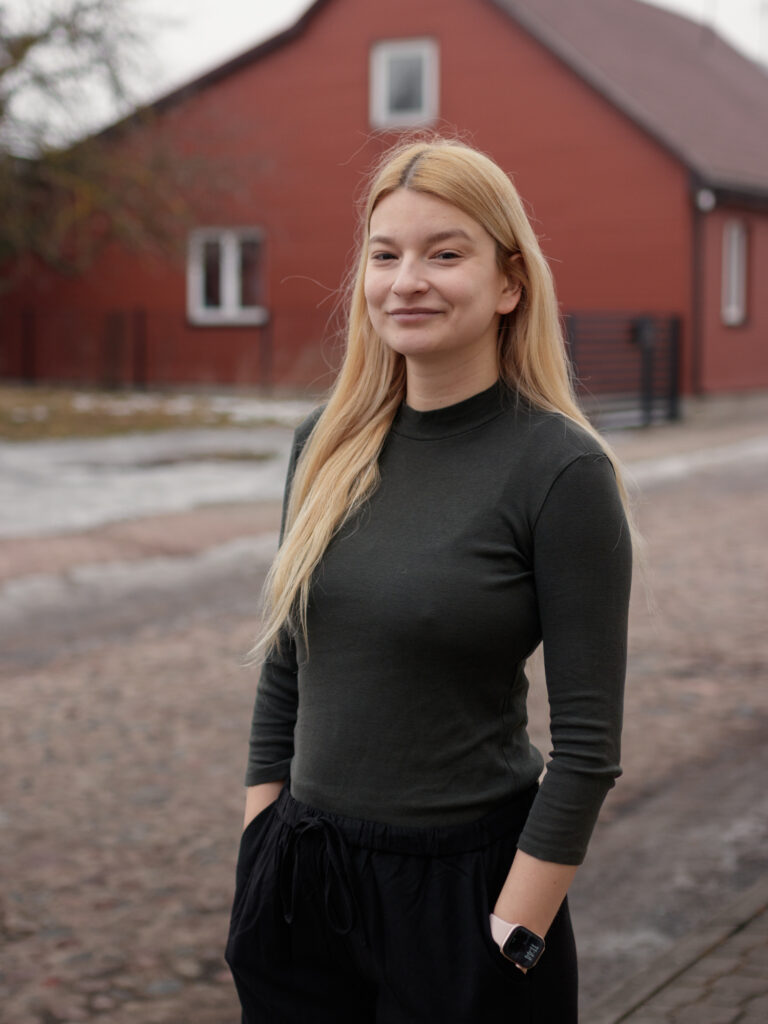
My parents didn’t migrate for a better life. They migrated to survive.
Teodora’s parents left Bosnia and Herzegovina in 1992, when the war in former Yugoslavia began. As ethnic Serbs, they were forced to move to Serbia in search of safety along with thousands of others whose lives had been suddenly and irreversibly changed by conflict.
But arriving to a new place didn’t mean starting over easily.
They entered a society already under pressure, where the sudden influx of war refugees created tension, competition for jobs and uncertainty about the future. Many locals feared that this late wave of migrants would further destabilize their already fragile economic situation. Integration wasn’t immediate or welcoming.
Years later, at 24, Teodora followed a similar path.
Looking for a better life, she moved to Slovenia with her partner, carrying not only her belongings but also a family history shaped by migration. She grew up knowing that movement was part of many people’s lives, that many of her relatives had migrated across the world, often struggling to find belonging in places where they weren’t always warmly received.
“Migration is a part of nature,” she says.
But building a new life as an immigrant means more than crossing a border. It means rebuilding your identity, your routines, your sense of self, often in a language you don’t yet speak, in neighborhoods where you don’t know your neighbors, in systems you don’t fully understand.
For many, integration doesn’t begin right away. Homesickness lingers. Silence replaces conversation. Pressure builds quietly.
“It’s not always the most pleasant process.”
Still, today, she says she’s happy to be here.
Because sometimes, migration isn’t about leaving home – it’s about slowly learning how to belong again.
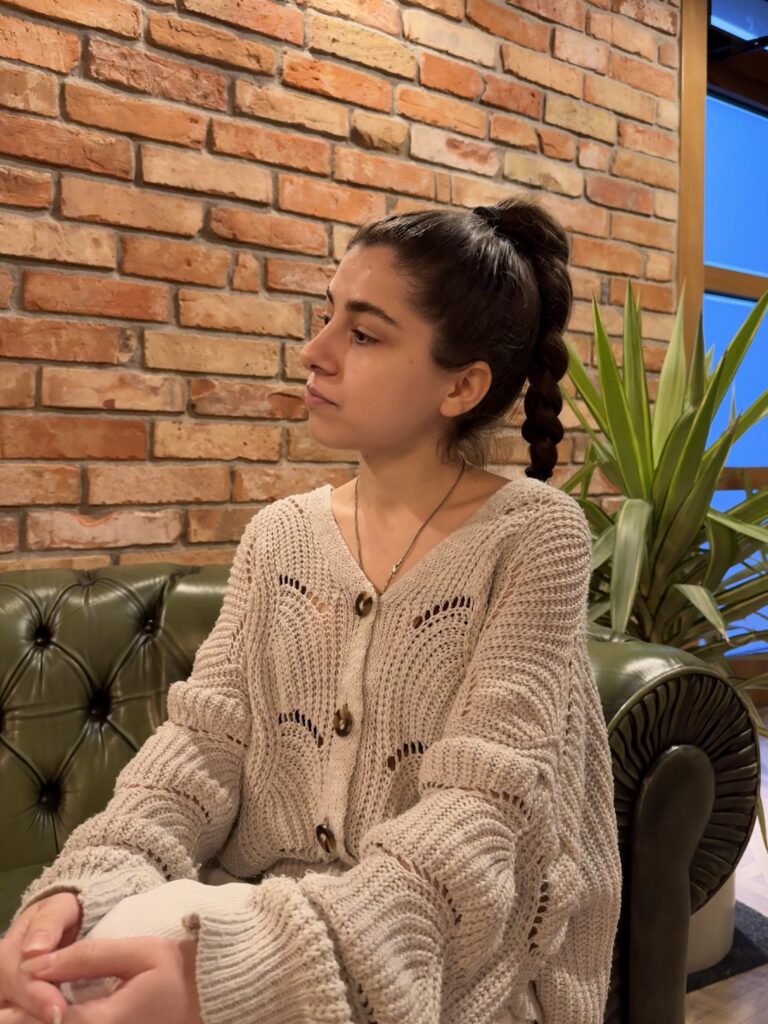
Teona
The first time I left Georgia my destination was an exchange semester in Germany, that then turned into a full year and a graduation there. Extending my stay meant starting over twice. The people I met during my first semester eventually left, and a new group arrived. I had to rebuild connections, routines, and a sense of belonging all over again. With the second group, I was more closed off and guarded, maybe more afraid of how temporary everything can be.
When I think about my life in Germany, the first word that comes to my mind is “easy”, or at least “easier”. The university supported me with documents, Visa process and scholarships. I felt guided, protected in a way and I got to be young, I got to live a student life.
Integration went in a smoother way. The international student community was vibrant and I was able to access local culture, even if building deep relationships with Germans remained hard.
Nonetheless, it was there that I experienced depression for the first time. A quiet but persistent feeling of not fully belonging. What helped, during the first semester at least, was realizing that many people around me were going through the same thing.
After Germany, I returned to Georgia but decided I would have better opportunities if I continued my life far from home. This is when my Hungary chapter began.
I arrived with high expectations, shaped by my previous experience. But everything felt different. Hungary marked what I describe as my second depression, this time marked by a loneliness that felt deeper.
The university environment was highly competitive and people tended to form groups based on nationality, and I was the only Georgian. There was no one who shared my language, my cultural references, my background. Even now, I feel I haven’t truly bonded with anyone.
At the same time, my old friendships have slowly started to fade. Distance and my time abroad changed my relationships. On top of this adult life arrived all at once and, with that, the little space left for socializing between working and studying.
And yet, within all of this, something shifted. Through hardship and solitude, I discovered a different kind of strength. A deeper sense of self-reliance. I know that no matter how alone, I will always have myself and I know I can count on me.
Ira
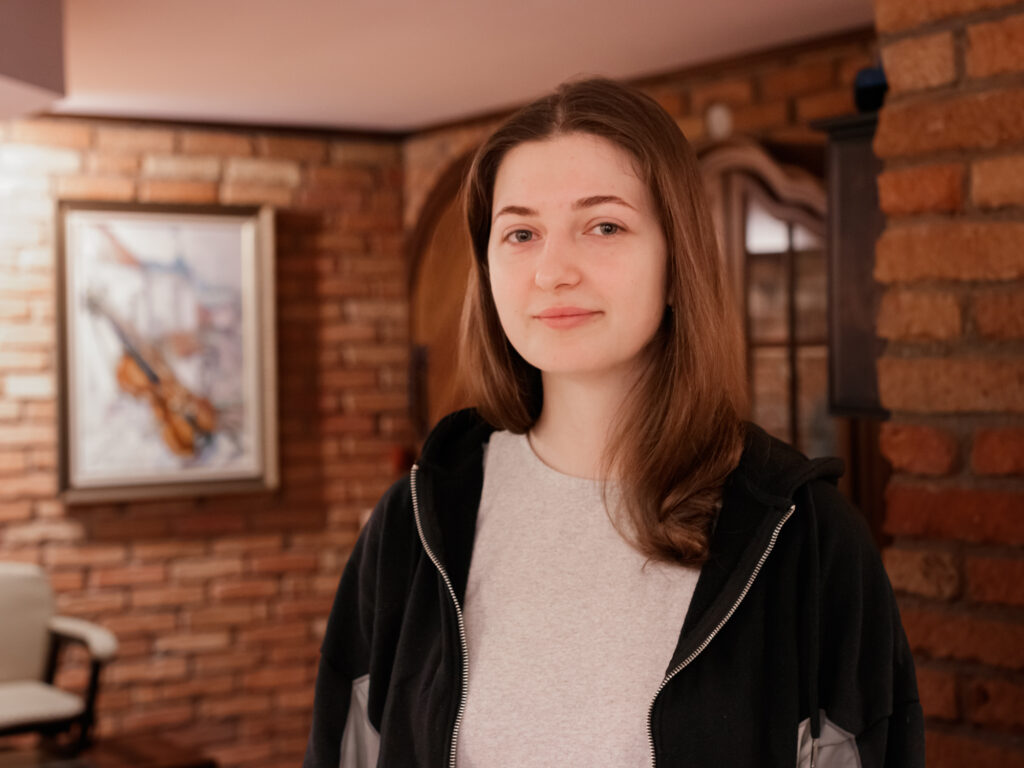
I was born in Murmansk, Russia. I studied in a strict math and physics Lyceum . I was not a good student, and teachers often reminded me of that. My parents were disappointed because of my grades.
Since childhood I loved art. But I often heard, “You can’t build a career with drawings. You need to become an engineer or a doctor.” So I tried to fit into a system that did not fit me.
When I was 14, I went to a summer gymnasium in Finland with my friend. That trip changed my life. For the first time I saw a different education system. Teachers spoke to students with respect. No one compared students or made them feel small. Everyone was different and that was normal. I remember thinking: this is how it should be.
When I came back home and realized I did not want to continue living in that negative environment. I wanted to live different. So I started learning Finnish and told to my parents I want to live in other country. One year later I was accepted into a gymnasium in Finland. That’s how I moved. Alone.
It was hard. New country, new language, no support. I felt lonely. Locals were not always welcoming. I struggled with the language and studies, work, visas,etc. Later I moved to another city and chose to study tourism in college, so I could practice Finnish every day. That helped. I met kind classmates who accepted me and finally I felt included and felt like belonged somewhere. Since I was 17 I hadn’t asked my parents for help. I wanted to be independent as well and didn’t want nobody be involved to my story.
After college, I moved again for work, and later to Helsinki to study tourism management at university-not something I liked but again forced by my parents . There I was the only foreigner in my class. I felt excluded and experienced racism. I didn’t know how to deal with it and didn’t know I can ask help from someone . I left university and felt lost for some time, working jobs I didn’t like.
I did not understand what i wanted from life.
At 24, I moved to Netherlands. Starting over again was harder than before. Leave everything I built by on my own.
Was great experience. Two years there helped me understand myself better. In the end I decided to return to Finland. It was not easy. I had changed and many connections were gone. But I was stronger.
Coming back was not easy. Time had passed. Many connections were gone. I had changed. I had grown. It felt like starting from zero again. But this time I was stronger.
My journey was not easy. There were moments of doubt, loneliness and pain. But every step, every person I met, every city I lived in, every challenge I faced made me who I am today.
Now I am finally studying what I truly love. I am surrounded by people who support and inspire me. I am happy. The road was not simple but it was mine.